Fifteen members from Art Appreciation and Local History Group 2 visited Birmingham Oratory.
Our guide, David Joyce, the Oratory archivist, gave us a detailed talk about the history of the Church, the origins of the Oratory of Saint Philip Neri and an insight into the life of Cardinal John Henry Newman, who was the founder of the English Oratory in Birmingham.
According to our guide, Cardinal Newman was one of the greatest Englishmen of the 19th century, he was a man who combined a great intellect with literary gifts and personal holiness. He founded the first Oratorian Congregation in Birmingham in 1848.
The present church was finished in 1909 and consecrated in 1920 after the death of the Cardinal in 1890. The plans were drawn up by Dorian Webb and this new classical church incorporated many ornate features. Its nave is basilican in the true ancient Roman manner and is 152 feet long. The roof is tunnel-vaulted and 12 marble columns line the nave, six on each side.
After an initial address the guide took us around the oratory stopping at each of the side Alters, Shrines and Baptistry. Before each Alter hang Italian-lamps. The arches of the recesses are covered in richly coloured mosaic tiles depicting scenes from the life of the Virgin Mary. The design plans were sent out to Murano, near Venice. On completion the mosaics were brought to England and put in place by Venetian workmen in 1913. Different types of marble, onyx and alabaster adorn the church and the ceiling in the Sanctuary is decorated with Eucharistic texts and motifs from Scripture. The images of the 14 Stations of the Cross were made from richly painted Limoges enamel.
We progressed to St Philip’s Chapel, which is the last remnant of the old church and Newman often said Mass there. The Chapel contains a large number of beautiful reliquaries and interesting relics.
Finally, we were taken to Cardinal Newman’s house and museum where we saw a video tour of Newman’s room preserved as he left it when he died in 1890. In the museum itself there were many precious historical items on view such as his spectacles and Rosary Beads.
Back outside in the quiet, red brick cloisters we could only marvel at how tranquil it all is especially when the busy Hagley Road is only a few yards away.
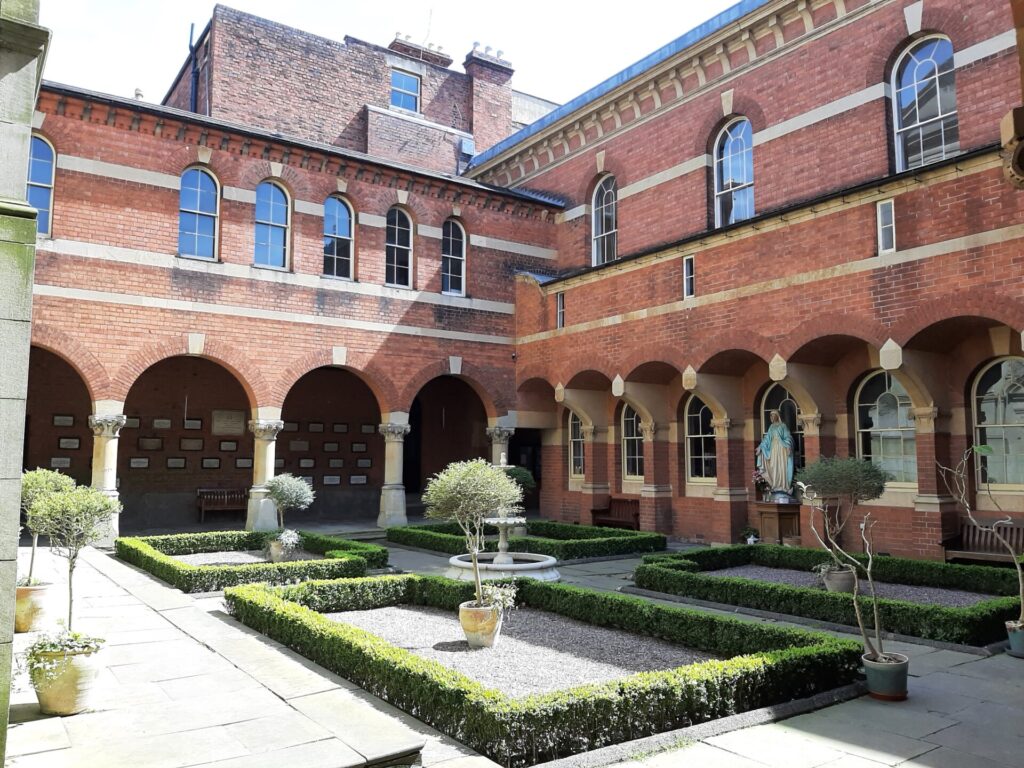
The cloisters
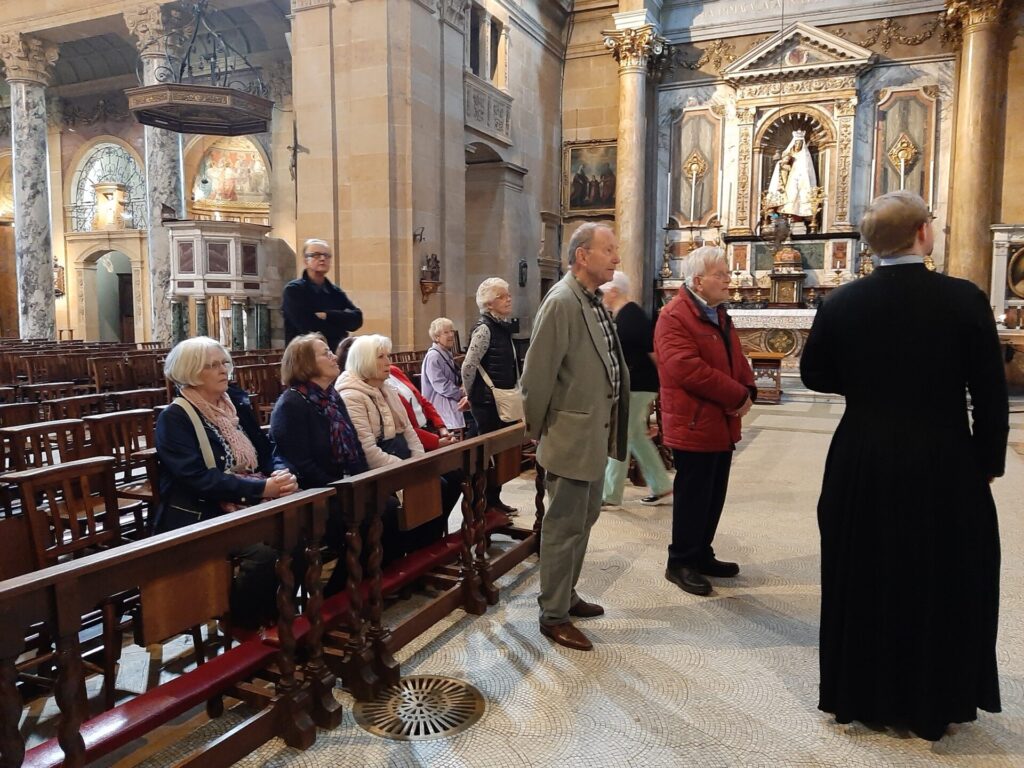
Members looking towards the Sanctuary which forms the focal point of the Church and provides the scene for the principal liturgical events of the Church year.
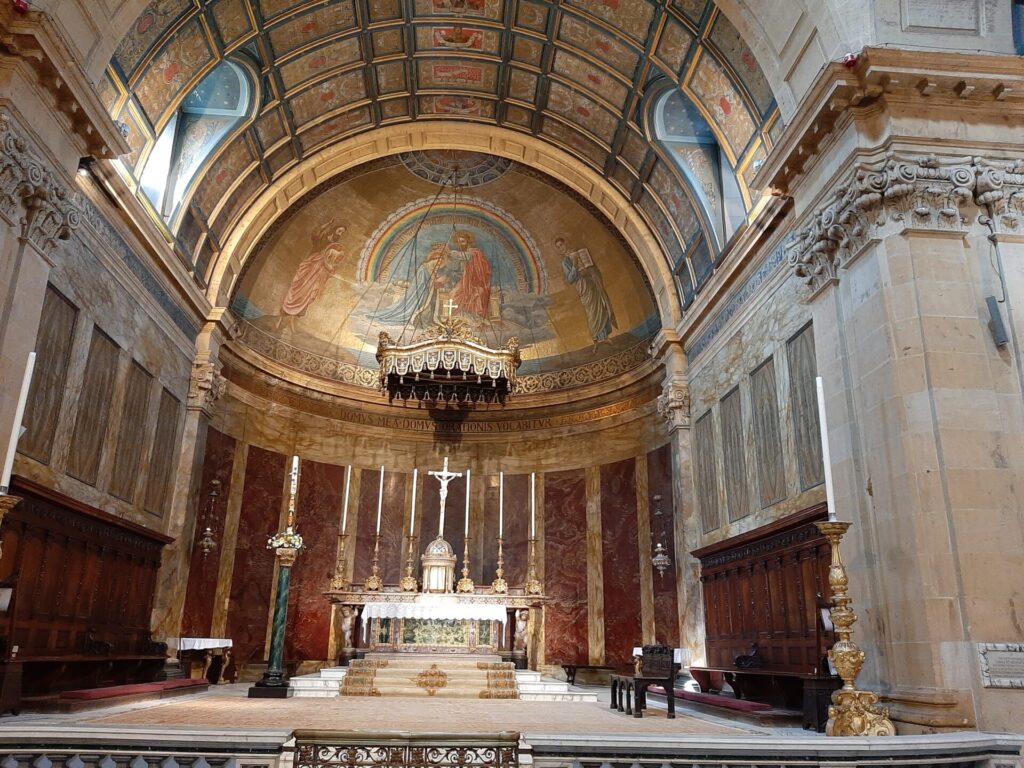
The nave, leading up to the Sanctuary; the pulpit is the most prominent object and is based on that in St Mark’s, Venice. The columns are 21’ 8” long, which include the Swedish marble bases and the column’s capitals.
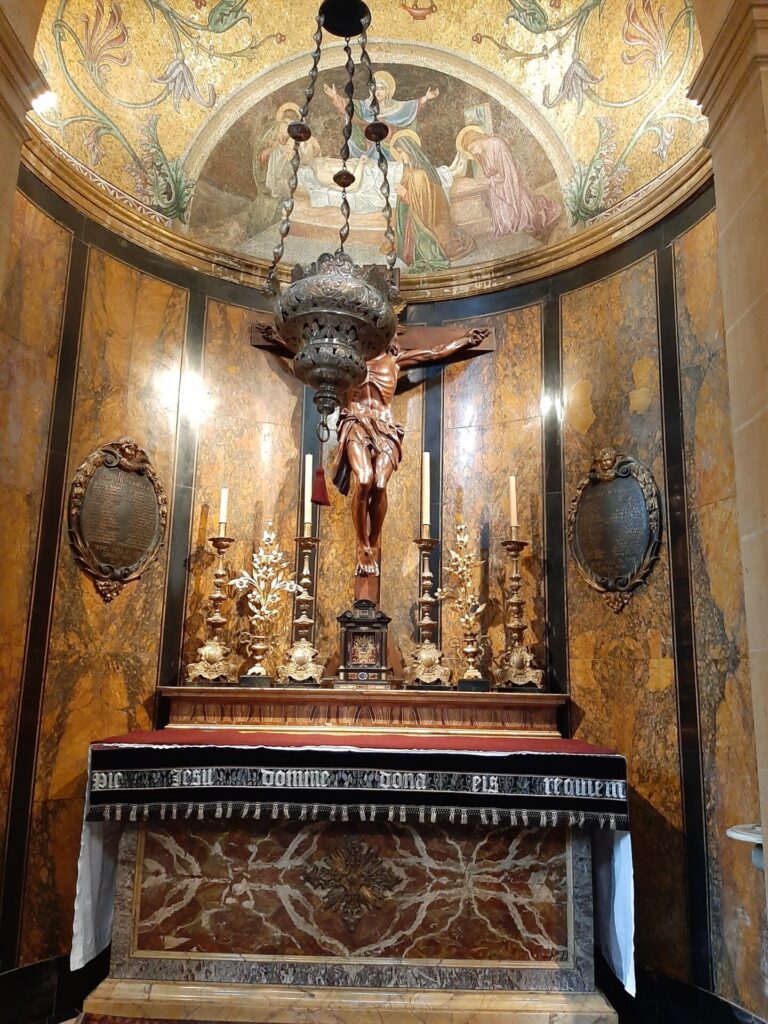
The Holy Soul’s Alter has memorial tablets to parishioners killed in the First World War.
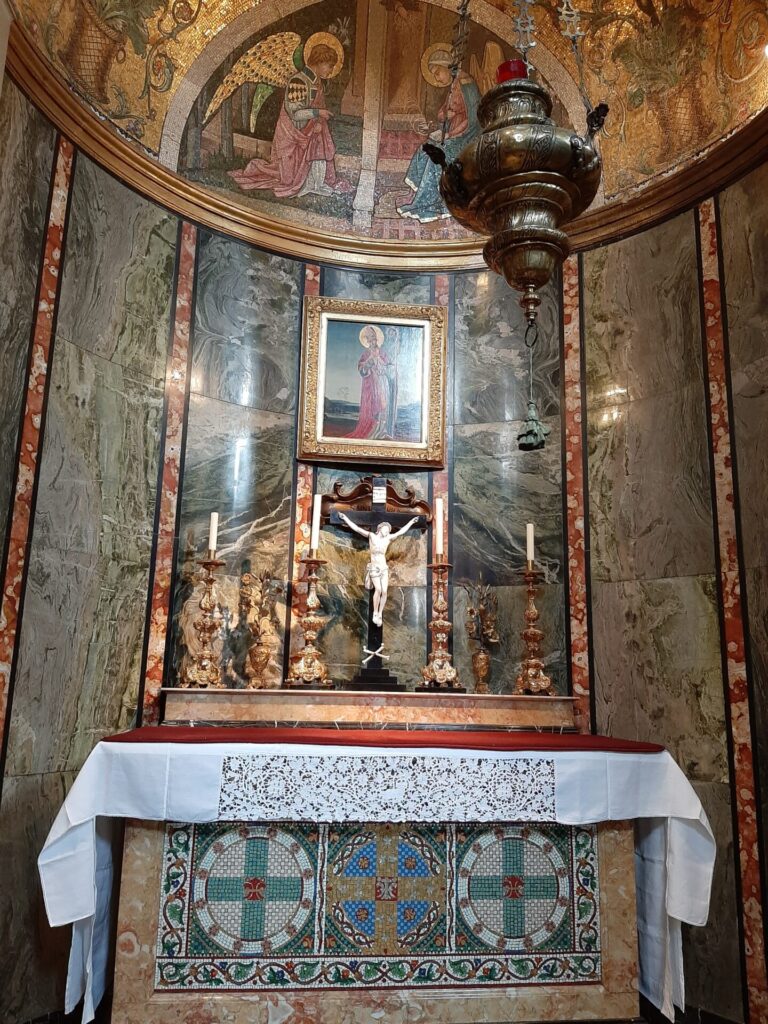
Saint Patrick’s Alter (the apse is lined with green Connemara marble).
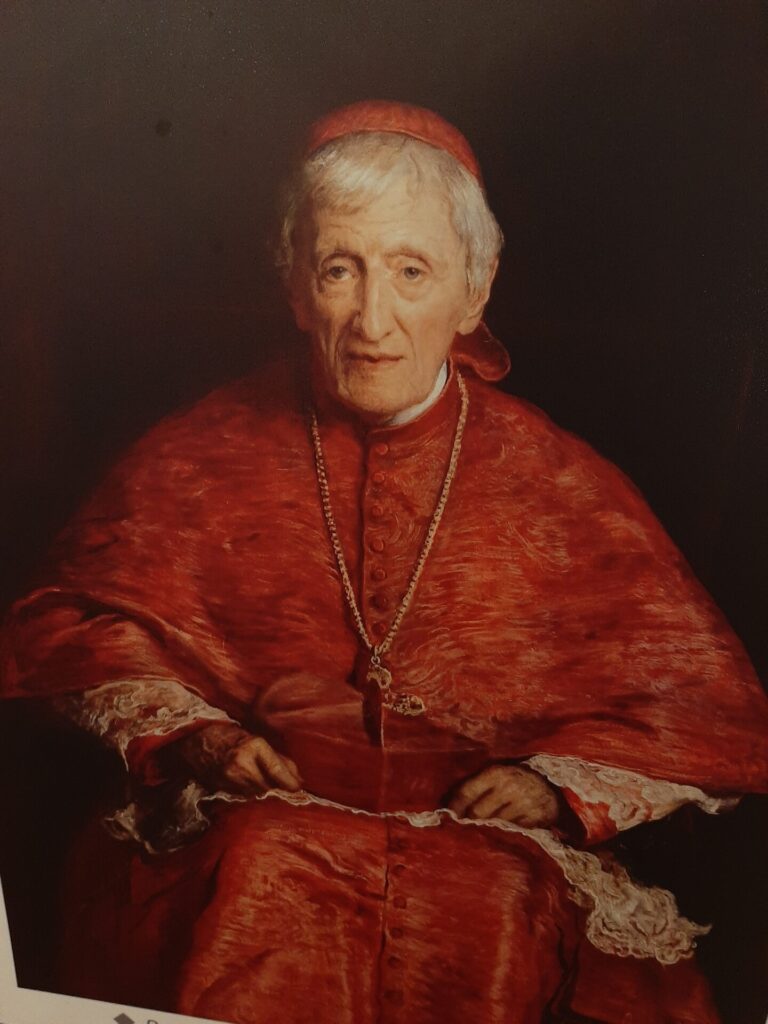
Cardinal John Henry Newman 1801 - 1890.